Reading & development
Why children love reading about themselves
A child who sees themselves in a book reads differently. What happens when a story is set in their own world, and how to make the most of it at home.
· 3 min read
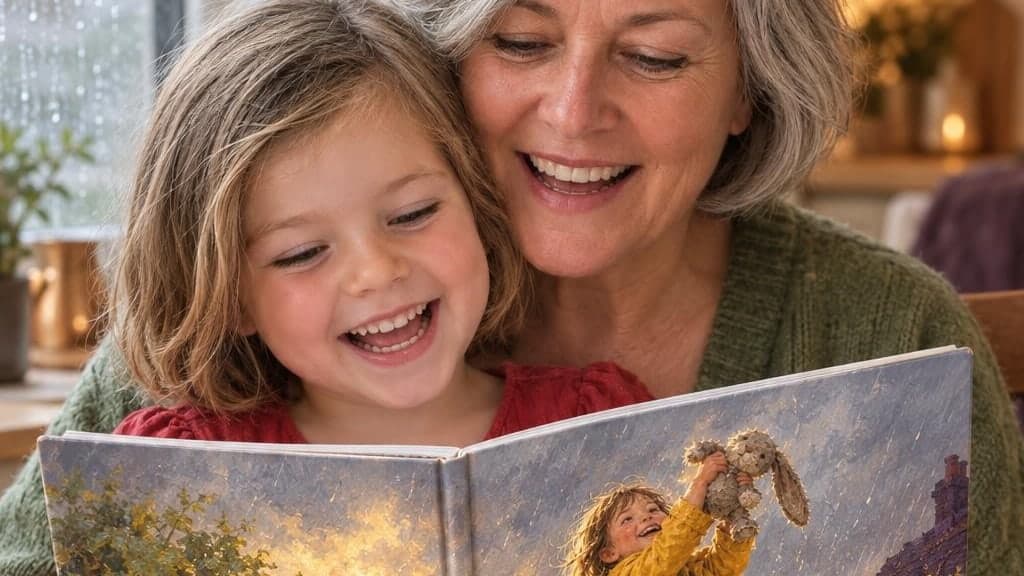
Anyone who has read aloud to a child knows the moment. Halfway down a page comes a name they know, or a place they have been, and suddenly they sit up. "That's us!" From then on, they listen differently.
That is no accident. Children look for themselves in stories. In a book where they really do appear, they no longer have to look.
Recognition holds attention
Young children make sense of the world from what is close by: their own room, their favourite toy, the people around them. A story that starts there connects with what they already know. They spend less effort working out who someone is or why something happens, and have more attention left for the story itself.
It is why so many children want the same book ten times over. Recognition feels safe. A book in which their own dog trots along, or their own grandma opens the door, offers that recognition from the very first page.
Being the hero
In most children's books, the child watches someone else have the adventure. In a personal story, they are the one who meets the dragon, finds the path or helps a friend. That makes a difference.
Children who see themselves do something brave often talk about it afterwards as if it really happened. They act it out, retell it, invent what comes next. The story becomes part of their own imagination, and that is exactly what reading is about.
For children who don't love reading, too
Not every child reaches for a book on their own. For a child who finds reading dull or difficult, a story about themselves can be a way in. Curiosity about "what do I do on the next page?" is often stronger than the reluctance to read.
Try reading it aloud and letting your child say the names. Or let an older child read one page aloud each evening. Their own story is a safe place to practise: they roughly know what is coming, and that makes it easier.
Getting more out of it at home
A personal book works best when it becomes part of everyday life rather than something special that stays on the shelf. A few ideas:
- Pause now and then. Ask what your child thinks will happen next. They know the main character better than anyone.
- Look for the details. Point out the toy, the shoes, the house. Children love spotting everything that is just right.
- Invent a sequel together. What would happen if Grandad had come along too? It teaches a child that stories can be made.
- Read it at a set time. Before bed, at the weekend with the grandparents, in the car. A fixed moment turns it into a ritual.
What makes the difference
An ordinary personalised book puts the name on the cover and sometimes changes how the character looks. The story stays the same for everyone. With a story from Mira, our digital storyteller, the story starts with what you tell her: who lives in your house, what makes your child happy and which little things only you know about. So your child recognises not just their name, but their whole world.
Curious what such a story looks like for your child? The page for children aged 3 to 5 and the one for children aged 6 to 8 show what changes with age.
A child who sees themselves in a book is not just reading a story. They are discovering that their own life is worth a story too.
Read more
Moments & gifts
A book from Grandma and Grandad
Why a story in which grandchild and grandparent share the lead role is such a special gift, and how to make it without the parents noticing.
29 July 2026 · 2 min read

Behind the stories
The details that make a story truly personal
A name is a start. What makes a story yours are the little things. How to choose the details that tell Mira the most.
8 May 2026 · 3 min read